EYE TRACKING
What people really see
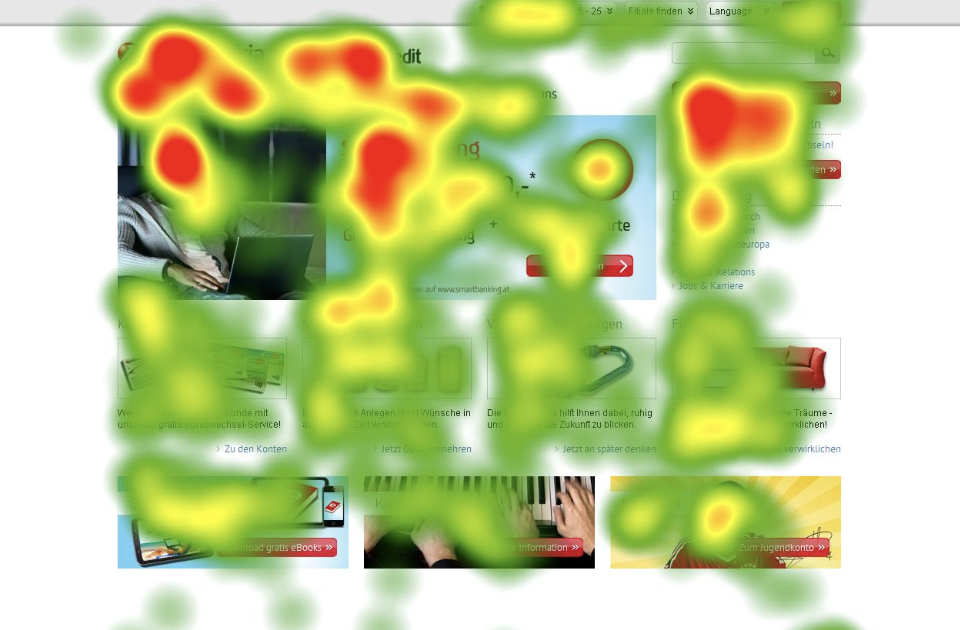
Eye tracking makes visual behaviour visible. It shows what receives attention, how people orient themselves and which information is overlooked.
Objective data on visual perception
A specialised eye camera records gaze direction and fixations. The analysis adds objective data to observation and interviews: it shows not only what people remember afterwards, but what they actually perceive while using a product.
Application areas
Digitale Produkte
Investigate websites, software, apps and digital information services from the perspective of real use.
Retail
Analyse attention, orientation and product perception in real retail environments.
Leitsysteme
Assess signage, wayfinding and decision points in buildings and outdoor areas.
Museen
Research visitor experience, interpretation, orientation and perception of exhibitions.
Other applications
Investigate print, direct mail, advertising and text comprehension with gaze data.
What is analysed?
Gaze density, gaze paths and area analyses show which elements hold attention and in what order they are perceived.
When is eye tracking useful?
Especially when visual attention, information hierarchy or orientation is decisive for the success of a service.
Always in the context of use
Gaze data do not automatically explain why something happens. We therefore combine eye tracking with specific tasks, observation and moderated interviews. The method and test setting follow your research question — in the lab, remotely or in real environments.