Websites and portals
We assess navigation, information hierarchy, entry pages, forms and the visibility of key content.
EYE TRACKING
We investigate which content people notice on websites, in software and apps, how they orient themselves and where important information is overlooked.
A usability test shows what people do and how they complete tasks. Eye tracking adds gaze data to this observation: which elements are seen first, in what order information is perceived, and how long users engage with an area?
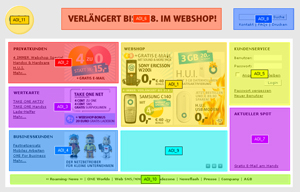
We assess navigation, information hierarchy, entry pages, forms and the visibility of key content.
Eye tracking shows how people perceive functions, prompts and complex work interfaces.
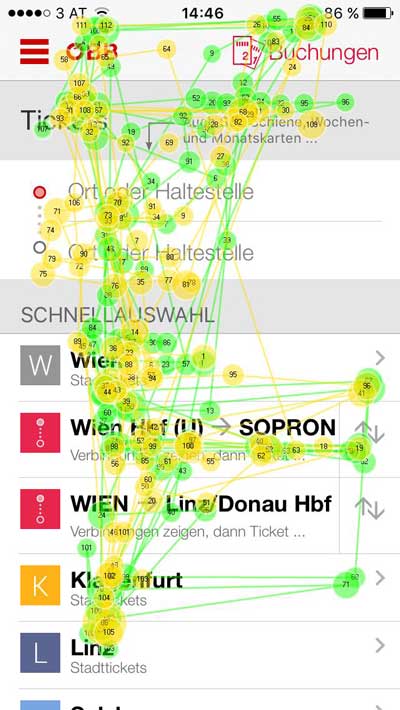
For apps and mobile websites, we investigate the perception of small screens, touch interactions and mobile use situations.
Variants can be compared objectively using gaze paths and attention — for example in layout, wording or visual hierarchy.
Is relevant content seen? Are prompts read? Do people find the next step? Does the design support fast, confident orientation?
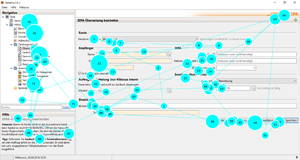
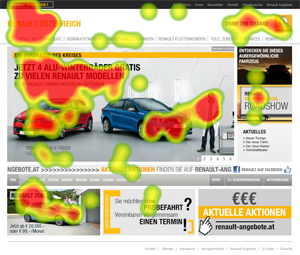
Gaze density, gaze paths, fixation duration and analyses of defined areas help classify attention patterns clearly.
Gaze data alone do not explain why something happens. We therefore combine eye tracking with realistic tasks, observation and moderated interviews. This produces insights that consider both perception and the underlying situation of use.
Heatmaps and gaze paths make patterns clear. Area analyses enable precise comparison of content, components and design variants.
You receive a clear interpretation and concrete recommendations for information architecture, layout, wording, interaction and further optimisation.