Orientation and wayfinding
Can visitors find their way independently? Are prompts noticed, understood and offered in the right place?
EYE TRACKING
We assess exhibitions from visitors’ perspectives: what is noticed, understood and remembered — and where orientation or interpretation barriers arise.
Visitor orientation is an essential part of contemporary museum work. Alongside general satisfaction, the whole visitor experience matters: expectations before a visit, orientation in the space, perception of exhibits, clarity of interpretation and the impression afterwards. Knowing problem areas precisely enables targeted improvement.
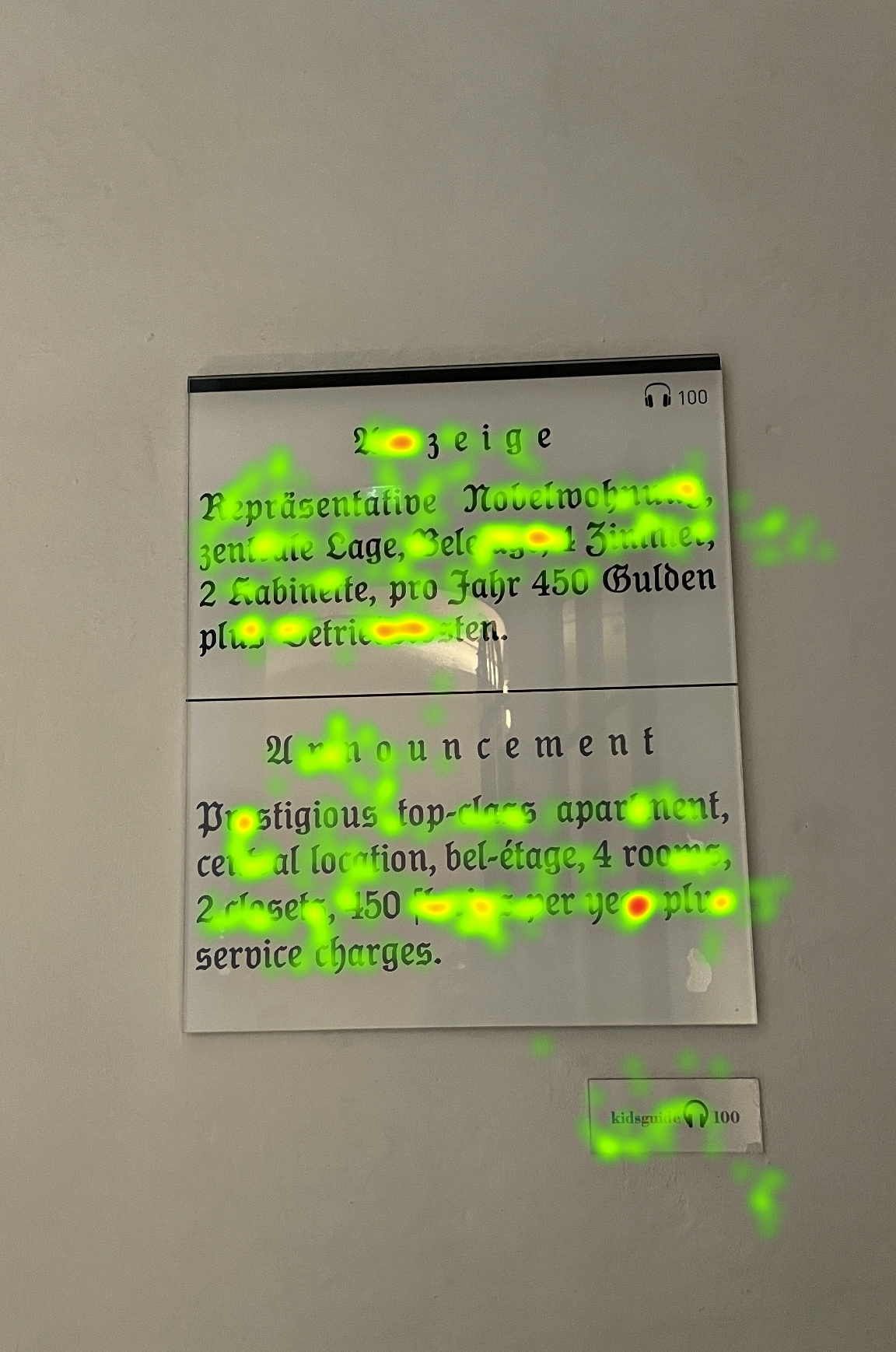
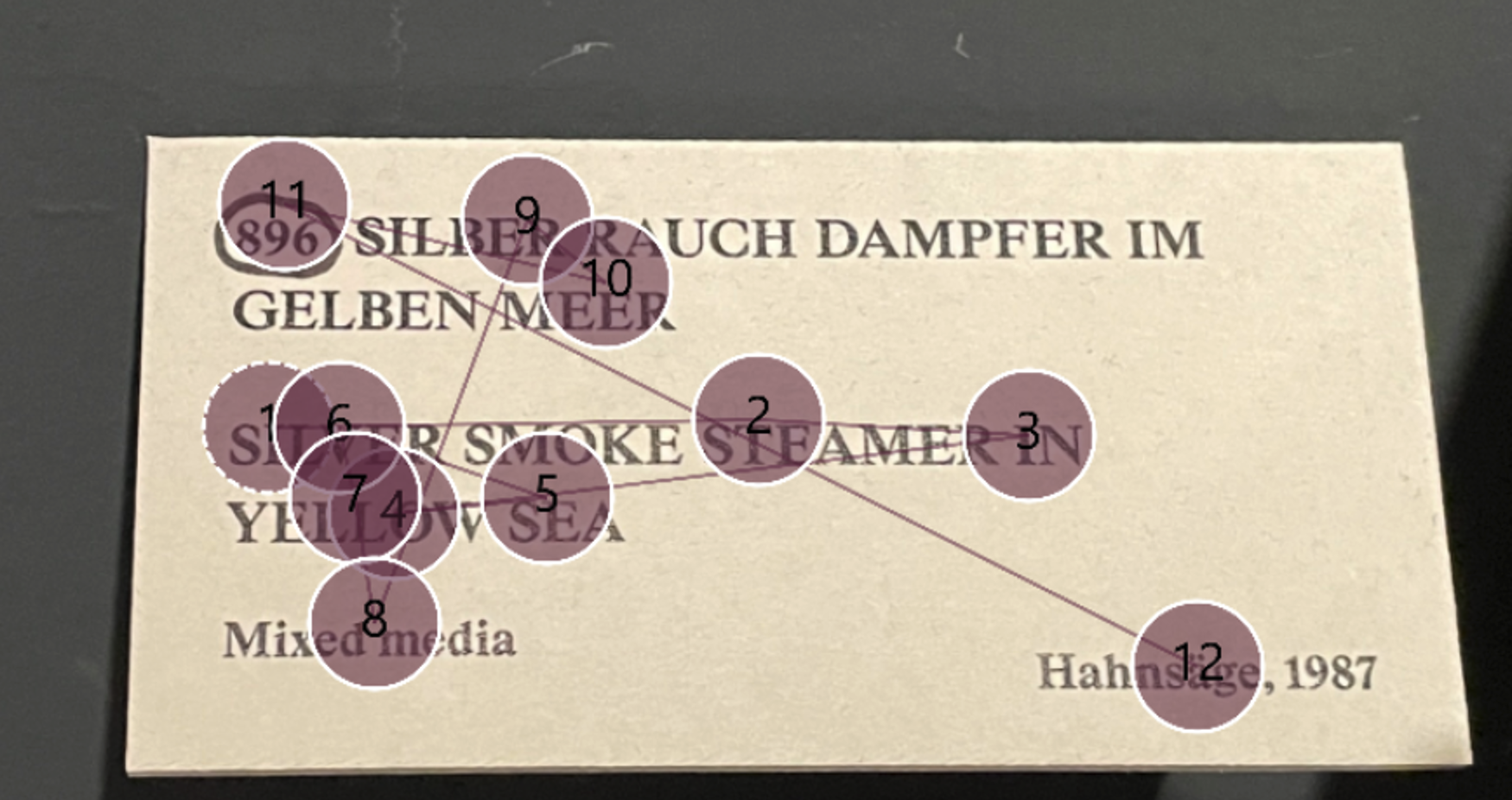
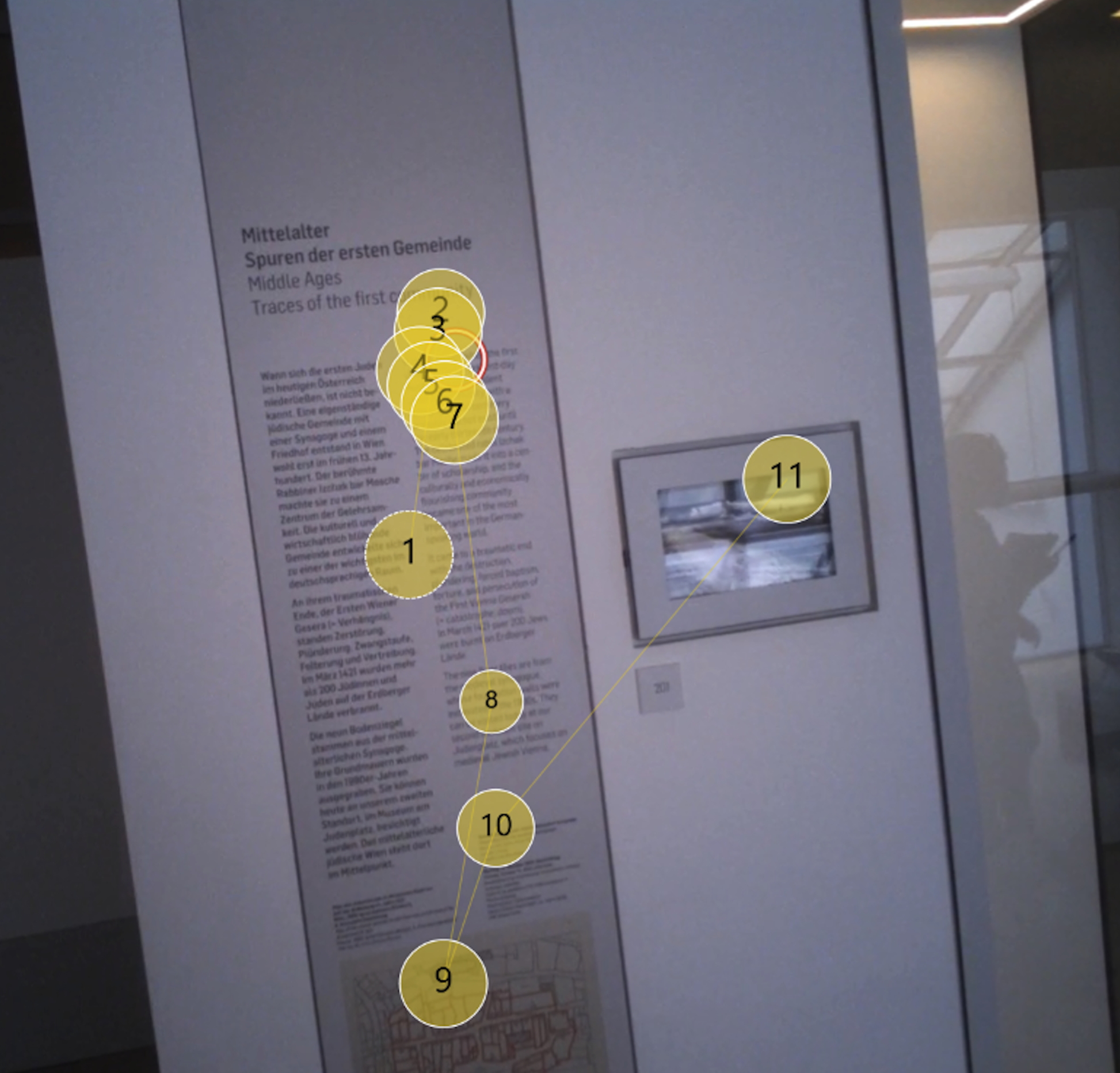
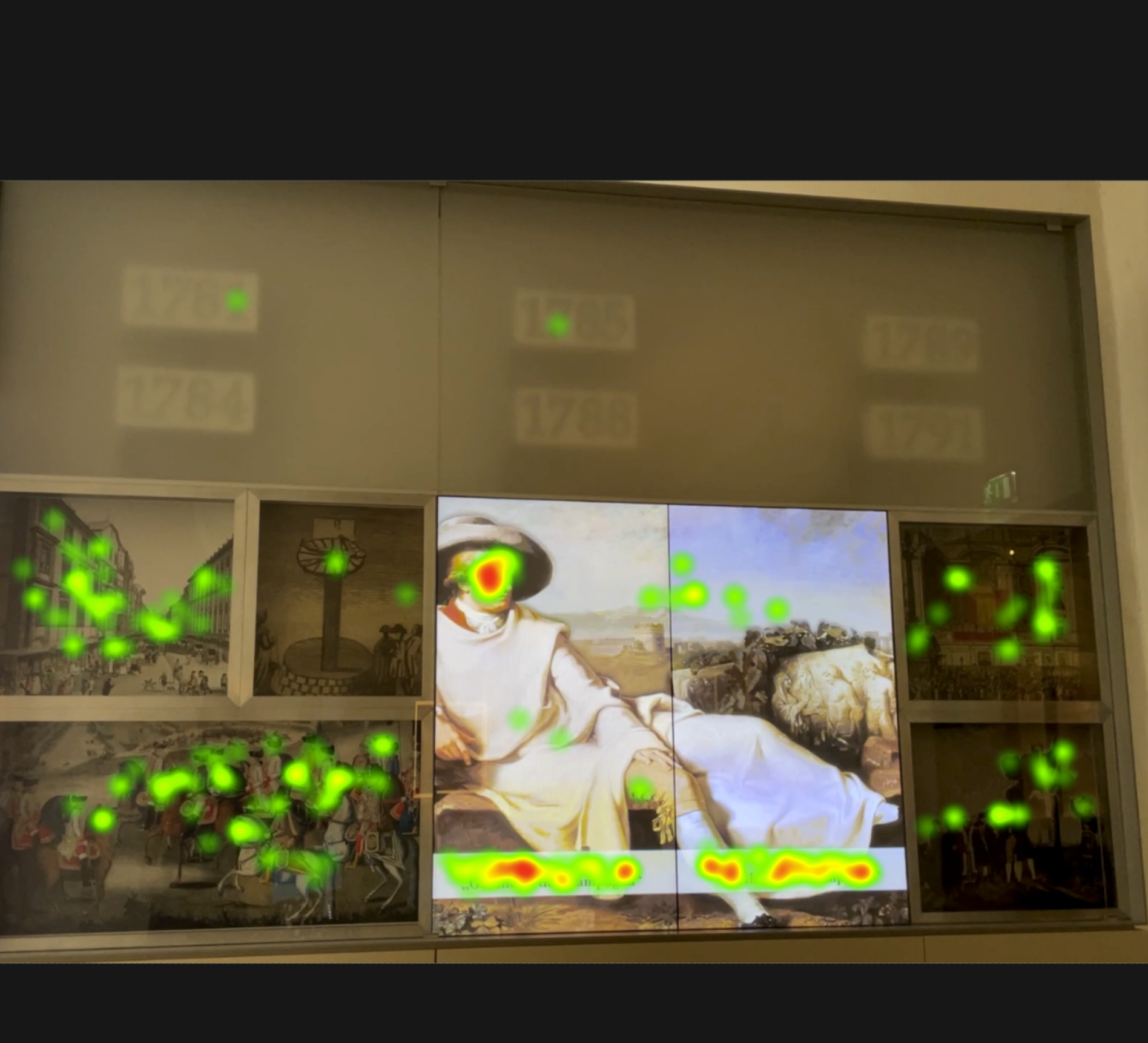
Eye tracking shows which exhibits, labels and information services receive attention and in what order visitors perceive them. Combined with a qualitative interview, it creates a nuanced picture: observable behaviour and visitors’ personal assessments are considered together.
Can visitors find their way independently? Are prompts noticed, understood and offered in the right place?
Is information understandable? Are themes, staging and key messages grasped?
Which texts are read? Can descriptions and information be assigned to the right exhibits?
Are touchscreens, kiosk systems and other interactive services recognised as such and used meaningfully?
We consider expectations, accessibility, wayfinding, signage, information hierarchy and the perception of individual exhibition areas.
In the final interview, overall impression, satisfaction, memories, knowledge gained and willingness to recommend can be assessed.
Problem areas are documented clearly, prioritised by urgency and supplemented with concrete recommendations for signage, wording, design, visitor guidance and interactive services.
For new exhibitions, prototypes, individual exhibits or parts of the interpretation can be tested before opening and improved step by step.