Products on the shelf
Which products are visible, which are missed, and how gaze paths move across the range.
EYE TRACKING
We show which products, information and point-of-sale elements customers actually notice in retail spaces — and which remain in the background.
With eye tracking, we analyse how people perceive a retail space. Gaze data show which elements attract attention, are only glanced at or completely overlooked. This makes navigation, evaluation and choice in real retail environments understandable from the customer’s perspective.
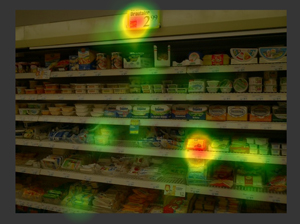
In physical retail, a few seconds often determine attention and choice. Customers scan shelves quickly, compare visually and often act intuitively. Post-shopping surveys rely on memory and can be incomplete. Eye tracking documents perception directly in the situation of use.
Which products are visible, which are missed, and how gaze paths move across the range.
Whether prices, labels, promotions and packaging information are noticed and understood.
How strongly displays, promotional areas and other attention triggers actually work.
How customers move through a space and where they search deliberately or hesitate.
Shelf optimisation, packaging impact in competition, POS displays, promotional areas, store layout, wayfinding and digital in-store screens.
Eye tracking can show whether labels are actually noticed and read — and whether they support orientation at the shelf.
A visual analysis of attention, comprehensible gaze paths and clear statements about what is perceived — and what is not.
The results are distilled into concrete recommendations for shelf design, product placement, POS optimisation and communication for management and teams.